HD Videos always in sync
Video players never go out of sync with our cutting edge technology, even across different episode. So binge watch party TV shows in single watch party.
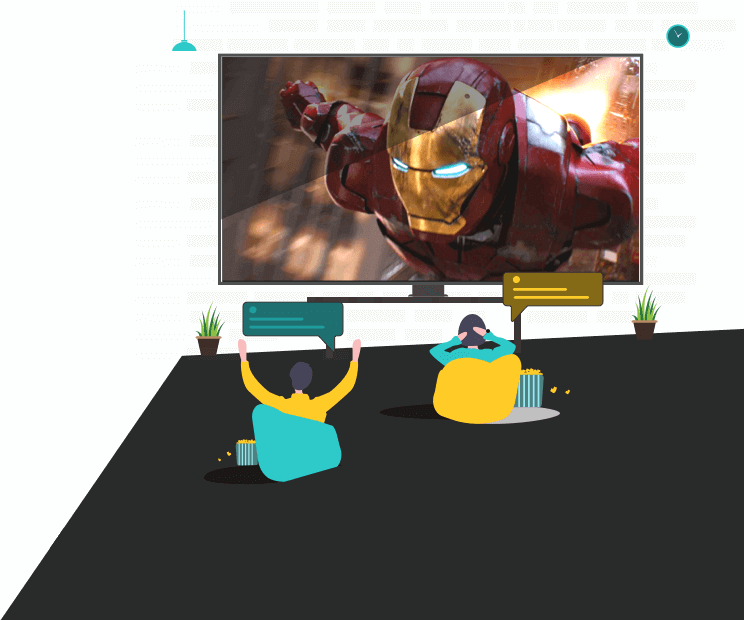
Start playing video on Netflix or other supported platforms.
Once video starts playing, click the Flickcall logo visible on top right to start watch-party (visible for 10 sec). You can also start party from Flickcall icon on chrome toolbar.
Click start party and copy invite link. Send the invite link to anyone to join your watch party.










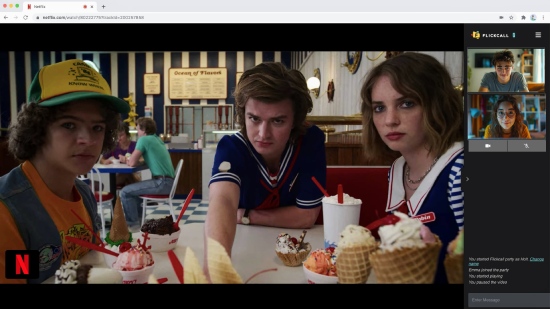
Create watch parties on Netflix, Disney+, JioHotstar, JioHotstar, HBO Max, MAX, Hulu, Prime Video, Youtube, Zee5, Sony Liv, JioHotstar with Flickcall.

Video players never go out of sync with our cutting edge technology, even across different episode. So binge watch party TV shows in single watch party.

Watch your friends laughing with you, Emotions shared in real-time. This is the next best thing after being together.

After installing extension, play the video and click Flickcall logo at top right to start party. Easy-peasy!!
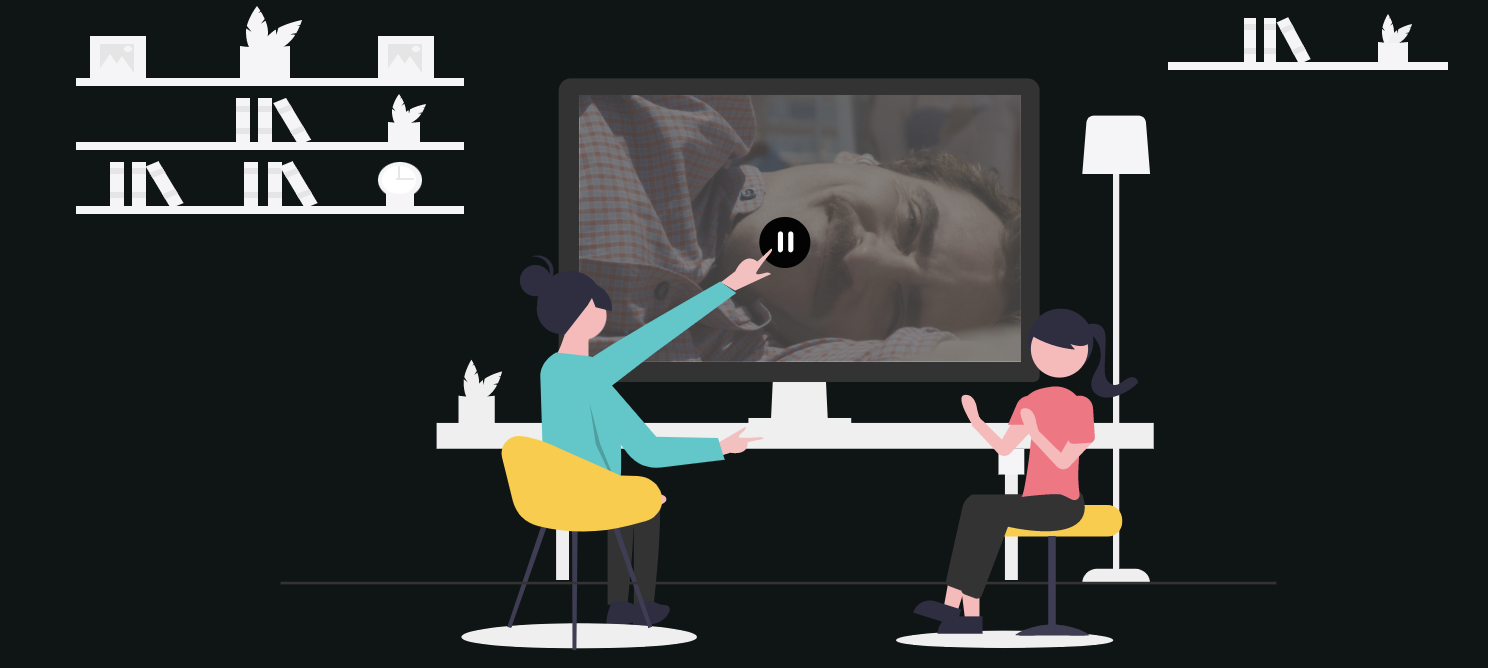
Mic is muted automatically during video play and activated whenever video is paused to engage in seamless conversations. So hit pause and start speaking.
Our peer to peer technology delivers your personal chats and calls directly to your friends instead of the traditional approach of routing it via servers.
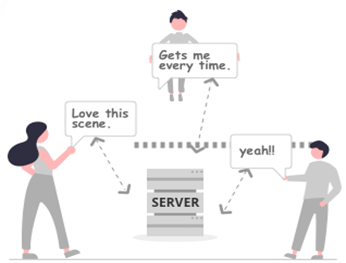
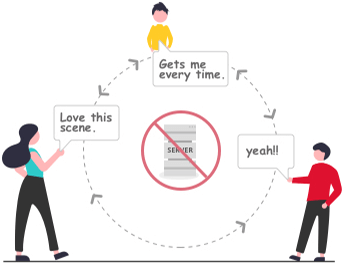
* In some cases, firewall setting doesn't allow direct connection, the calls and messages are encrypted and routed via our servers.
Near the edge of the fairground, someone had painted a small mural: a winding road that looped, crossed itself, and then opened into a field of doors. Each door was a different color and had a label: Regret, Repair, Return, Rewrite, Rest. Beneath the mural, someone had added one more word in small, careful letters: Wrong turn: isaidub new.
Mara thought of how often wrong turns are hidden by denial, by the polite pretenses of lives organized into success metrics. Here, wrong turns were offered a language. Saying the phrase created a collective ledger; confessions were folded into a patchwork map where each misstep had a coordinate and a story. You did not erase your mistakes; you located them, and by locating them you unmoored the shame.
The child nodded. "We call it isaidub new so it's easier to say than, 'I took a route that scared me and I don't know where it goes.' Names make our feet braver."
The road snapped off the interstate like a thought abandoning its sentence: narrow, cracked, and suspiciously warm in the late-afternoon heat. Mara's rental hummed as she took the turn, GPS recalculating in a voice she no longer trusted. Her destination pin flickered some miles back, swallowed by a maze of unnamed lanes. A banner of thought unfurled in her mind—wrong turn—and then a second, stranger phrase: isaidub new. It arrived like a memory misfiled, a sequence of sounds that might be a password, a place, or a reprimand.
Mara thought about the ordinary arc of things: guilt, apology, quiet endurance. She considered the siren comfort of pretending a wrong turn never happened. Then she said, softly, "Maybe. Sometimes."
On the interstate again, the GPS chirped its brusque recalculations. Mara smiled at it and thought of the willow and the child and the coin. She kept the words in her mouth for a long time, like a charm or a question. Saying them did not promise a tidy ending. It offered, instead, a method of attention: if you find yourself off the highway, admit it. Name the detour, learn its features, and then decide whether you will keep walking or build a path back. The wrong turn, properly recognized, becomes a kind of newness—rough, honest, and entirely yours.
On a bench beneath the willow, Mara met the child with the sharp eyes again. She offered a coin and the child accepted it with a gravity that made the exchange feel like a treaty. "Did you find anything?" the child asked.
Mara left the cafe with directions that sounded like parables: "Follow the river until the willow leans double; count the fences with blue paint; do not take the road with the stones that sing." The instructions were eccentric and precise in ways that suggested survival rather than hospitality. She followed them because the wrongness of staying was certain, and wandering had at least the dignity of discovery.
A bell chimed as she pushed into the cafe. The patrons glanced up and then back down, as if interrupted by a courtesy rather than a stranger. The barista slid a coffee across the counter and pronounced the price as if she were sealing a small compact with a secret: "Fifteen for the cup, five for the story." Mara touched the paper money she no longer trusted and asked what the story was.
"isaidub new," the barista said, smiling the way people do when they're about to tell an old joke. "It's a place. It's a rumor. It's what people say when they cross over."
Mara ran her fingers along the painted path until the roughness of the paint raised a whisper beneath her palm. She thought of the lives she'd overheard like radio frequencies on that heat-bent road, of the quiet economies of confession and the trades made in second chances. She understood then that the phrase was less a destination than an invitation: to be honest about the turns you took, and to give the maps to others who might later wander.