
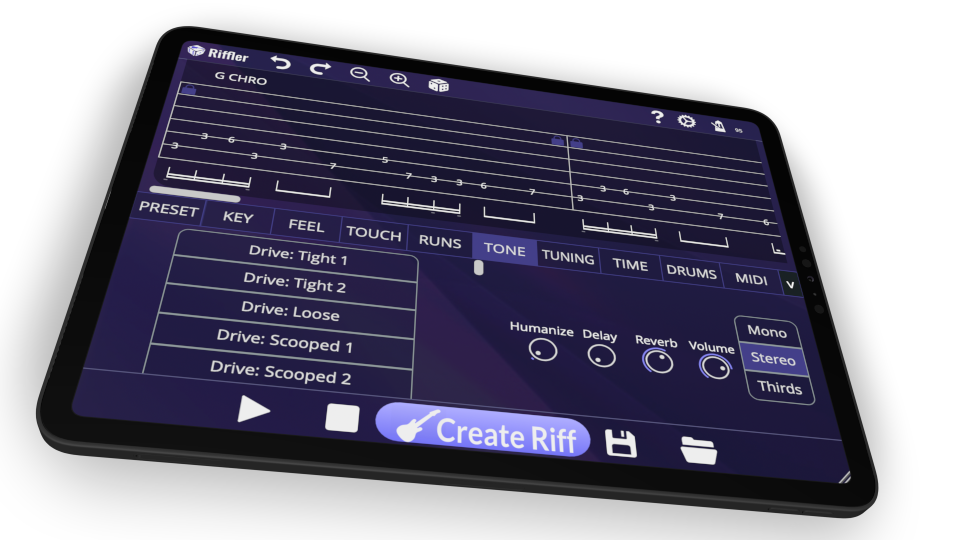
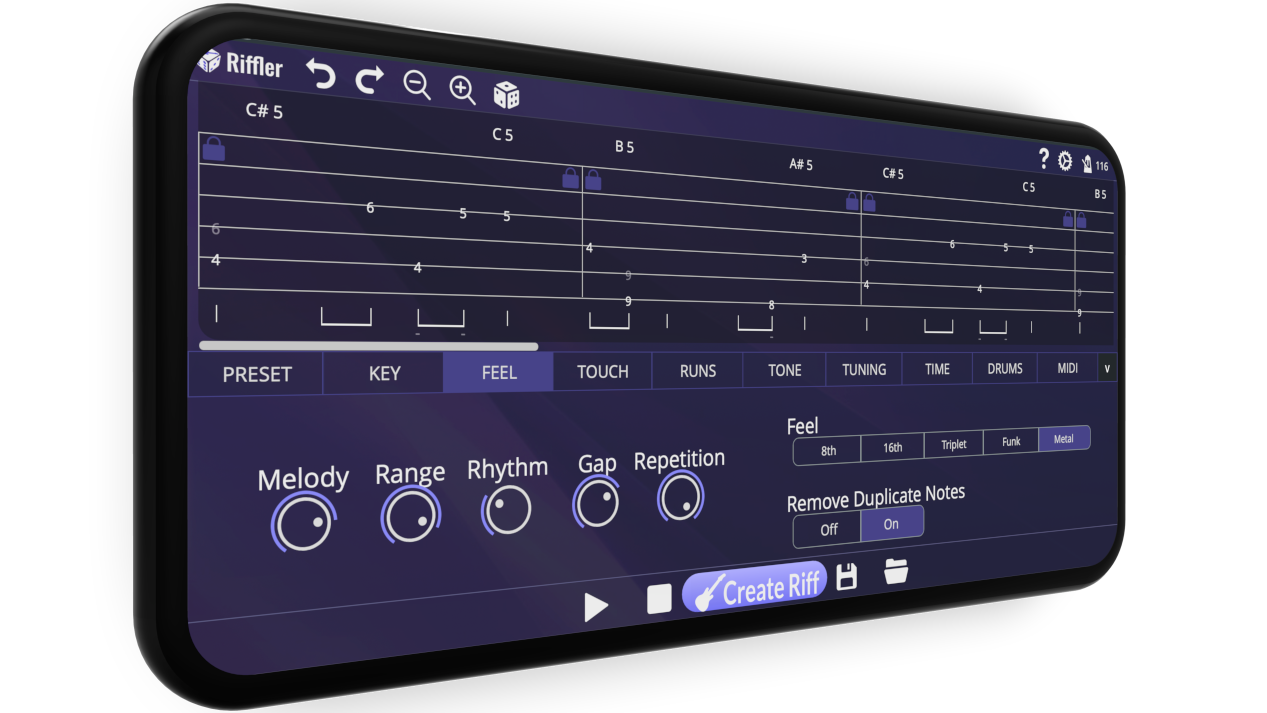
Riffler creates unique, copyright-free guitar riffs instantly. There are a huge range of preset styles, whilst advanced users can explore a wide range of customization options to fine-tune their sound. Riffs can be exported as an audio* or MIDI file and, as Riffler is a VST* and AUv3* plugin, it can be used as a standalone app or inside a host DAW*.
*Not currently on Android.



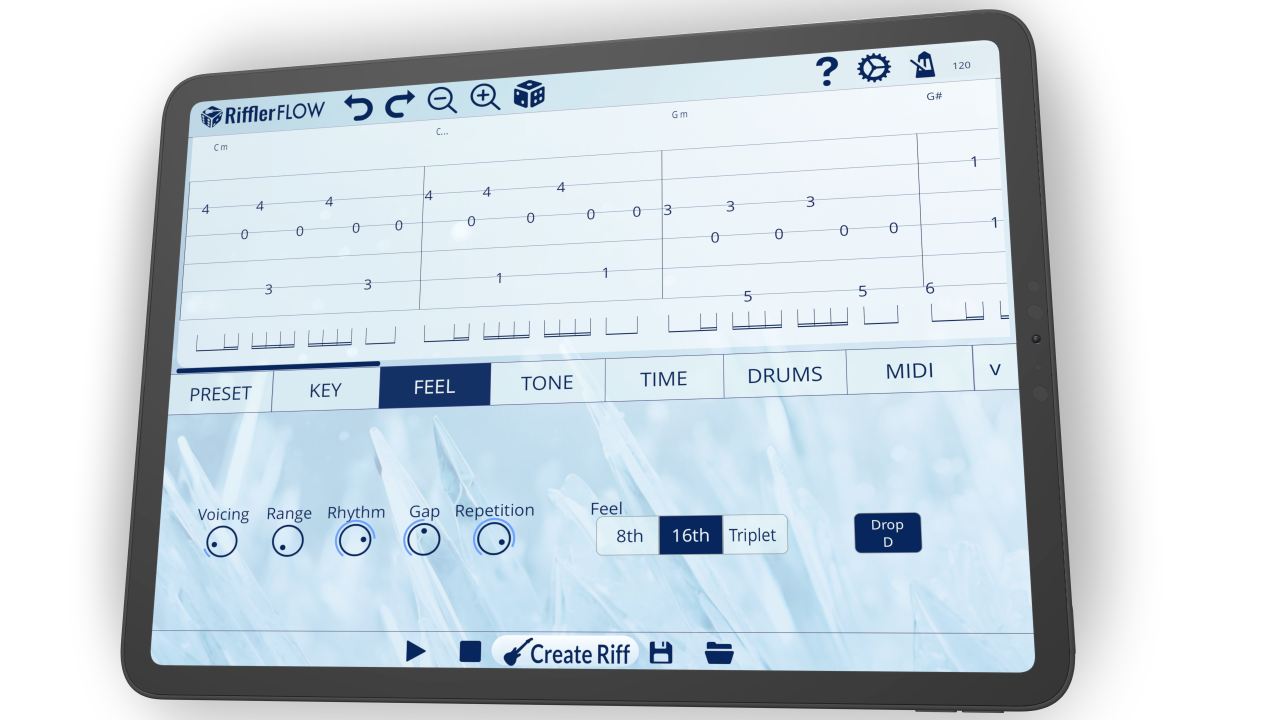
The original Riffler was perfect for instantly making heavy, distorted, scale based riffs. Riffler Flow is a brand new app that instantly generates softer, clean, arpeggio based riffs at the press of a button. Perfect for rock, hip-hop, EDM and more, Riffler Flow includes the same great features as the original Riffler including audio and MIDI export and the ability be used as an AUv3 inside a host DAW.
Wait, I need to make sure I'm using the correct terminology. "Perverformer" isn't a standard term, so I should clarify that it refers to performers in adult content being distributed illegally. Also, note that torrenting itself isn't illegal, but sharing copyrighted material is. So the illegality comes from the content, not the technology. Maybe that's a point to mention in the legal section.
Peer-to-peer (P2P) torrenting, a decentralized file-sharing technology, facilitates the distribution of digital content. While torrenting itself is a neutral tool, its misuse has sparked significant legal and ethical concerns. This essay examines the specific case of "perverformer torrents," a term likely denoting unauthorized torrents sharing adult entertainment content, and analyzes the associated legal, ethical, and technical ramifications. By exploring these dimensions, we aim to highlight the broader implications of such digital piracy while acknowledging the nuanced debates surrounding it.
Make sure to use credible sources where possible, but since this is an essay, it's okay to reference general knowledge about copyright laws and torrenting's risks.
The unauthorized distribution of copyrighted material via torrenting violates intellectual property laws, with the U.S. Digital Millennium Copyright Act (DMCA) and the international Berne Convention serving as key legal frameworks. For instance, distributing adult content without the rights holder's consent infringes on copyright and may lead to severe penalties, including fines or criminal charges. Countries like Germany and the UK have stringent laws against piracy, whereas others, such as Canada, enforce strict penalties for copyright infringement. Additionally, performers' rights are increasingly recognized; in 2021, the California Adult Performer Protection Act was amended to address unauthorized dissemination of adult material, emphasizing consent and compensation. Torrenting "perverformer" content not only violates these laws but also undermines performers' rights, perpetuating exploitation in an industry where labor issues and unauthorized use of content are rampant. perverformer torrent
Wait, I should check if "perverformer" is actually a term used in the community. Maybe it's a typo. If not, perhaps I should adjust the title to be more precise. But since the user provided "perverformer torrent," I have to work with that term. Maybe clarify in the essay that it's likely a misspelling or a specific jargon from certain communities.
Make sure to cite specific laws if possible, like the Digital Millennium Copyright Act (DMCA) in the US, and how international agreements handle IP rights. Also, maybe mention recent cases where individuals were penalized for torrenting adult content.
Alright, time to start drafting each section with these points in mind, making sure to address all aspects thoroughly and maintain a balanced perspective where necessary. Wait, I need to make sure I'm using the correct terminology
I should also consider the ethical angle: even if the content is legal, the means of distribution can involve theft of intellectual property. For adult performers, there's the issue of unauthorized distribution of their work, which can be a form of exploitation. Some performers might distribute their own content, but often it's third parties who torrent it without consent.
The proliferation of "perverformer torrents" underscores the complex interplay between technological innovation, legal responsibility, and ethical consumer behavior. While torrenting itself remains a neutral tool, its misuse for unlicensed distribution of adult content has profound consequences. Legally, it violates copyright and labor laws; ethically, it exploits performers; and technically, it endangers users. Addressing these challenges requires a multifaceted approach, combining stricter enforcement of intellectual property laws, support for ethical alternatives, and digital literacy campaigns to educate users. By prioritizing respect for creators’ rights and performer protections, society can foster a more equitable digital landscape.
Potential challenges: Ensuring accuracy about the adult content industry's stance on piracy, which might be conflicting—some might argue their content is more likely to be pirated due to the stigma and restricted access, but others see it as a violation of their rights. So the illegality comes from the content, not the technology
Also, balance the essay by mentioning that some torrent sites might host content that is non-copyrighted or in the public domain, but in the case of "perverformer," it's more likely unauthorized distribution.
I need to avoid any advocacy or judgment in the essay, just present the facts and arguments. Also, check for any biases—don't assume that torrenting is automatically bad, but highlight the consequences and the reasons why it's problematic.
Another point is the global aspect: copyright laws vary by country, so someone in one country sharing content that's legal in another country might still be infringing if the rights aren't clear. This can complicate legal enforcement.
In terms of technical issues, torrenting is decentralized, making it hard to shut down. But ISPs and law enforcement track and penalize users who share illegal content. Also, torrent sites often host malicious files, so users risk their devices.
The debate over file-sharing often centers on balancing free access to content with the rights of creators. Some argue that overpriced or restrictive licensing models drive piracy, while others maintain that unauthorized distribution ultimately devalues creators’ work. Legal alternatives, such as subscription services like OnlyFans or direct downloads from performers' verified sites, offer more ethical consumption paths. For example, platforms like Patreon enable artists to monetize their work directly, reducing reliance on torrenting ecosystems. These models not only comply with the law but also ensure performers receive fair compensation.